


A Legacy Learned Early
When charitable giving is such an important part of how someone was raised, those values translate into multigenerational philanthropy later on in life. For Danielle Butin, charitable giving was never about recognition or obligation. Instead, it was simply how her family lived.
Her stepfather, whom she lovingly calls her “soul’s father,” embodied generosity without fanfare. He served on nonprofit boards, spoke often about impact, and sincerely believed in noticing the needs of others.
“My father didn’t believe in fanfare for giving,” Danielle reflects. “He saw it as a way to live.”
As a result, those early lessons became the foundation of Danielle’s life and work. Today, they continue through her family’s donor advised funds at JCF and through Afya, the global medical relief organization she founded. Together, they tell a powerful story of multigenerational philanthropy in action.
Trust as a Family Value
One of the most formative choices Danielle’s father made was creating a donor advised fund at JCF for each of his children and, later, for his grandchildren. These funds were not symbolic, but were real tools, entrusted fully to each family member.
Rather than directing how the funds should be used, he gave his children agency to use them as they saw fit. In doing so, he sent a clear message that he trusted them.
“By structuring it that way,” Danielle says, “he was whispering, ‘I trust you to make these decisions.’”
That trust made philanthropy feel natural, not intimidating. Moreover, it reinforced that giving was not about control, but about confidence and values.
Learning to Give Before Learning to Earn
For Danielle, that trust became tangible early on. While studying occupational therapy at NYU, she recommended her first grant from her JCF fund to support the local Alzheimer’s Association. It was an organization she knew intimately through her clinical work, yet one she could not have supported financially on her own at that stage of life.
Through her donor advised fund, she could.
Just as importantly, her father emphasized unrestricted giving. He understood that organizations rarely know exactly where the next gap will appear. As a result, he believed trust based philanthropy honors the realities nonprofits face every day.
The Moment That Changed Everything
Years later, at a crossroads in her own career, Danielle left a senior position in for-profit healthcare. While the decision surprised many, she followed a persistent inner voice that had been urging her toward Africa.
There, in Tanzania, she encountered a moment that would change her life. Inside a tent, she met a physician who was crying. She spoke about having no access there to medical supplies. Children were dying. And despite her training, the doctor could do nothing to help them.
Danielle did not arrive with a solution. She could only be present and listen. However, she knew that somewhere, a bridge could be built between abundance and need.
“In that moment,” she says, “her story completely changed mine. Afya was born in the setting sky of Tanzania.”
Building Afya: Scaling Without Losing the Soul
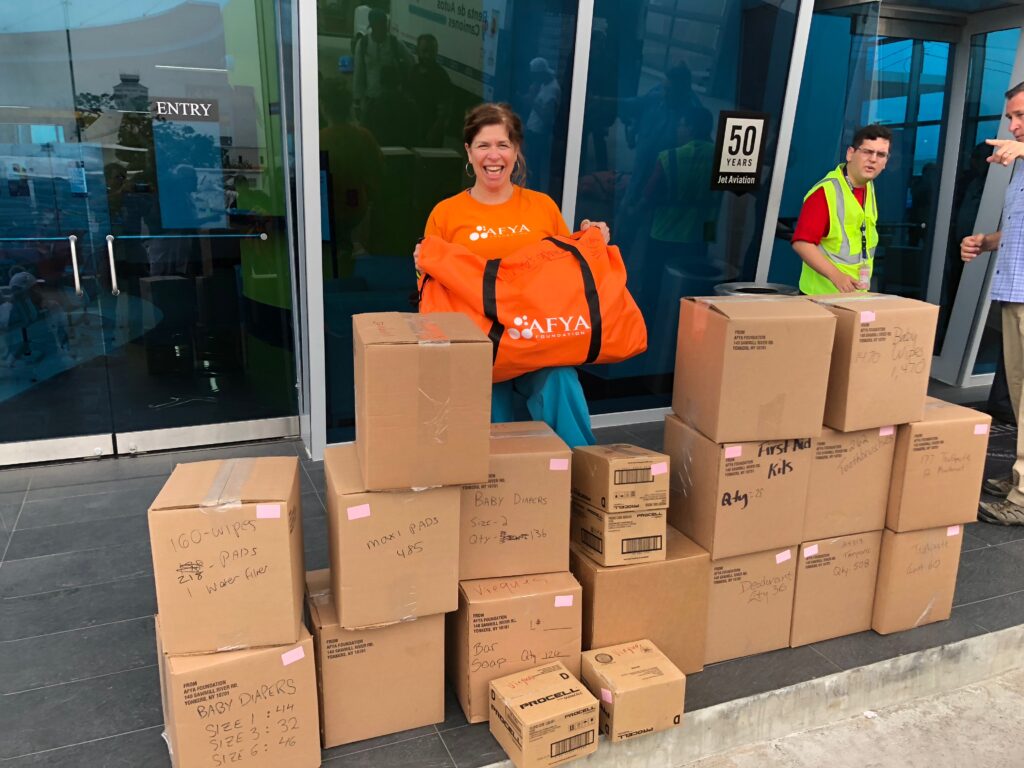
What began in a garage with a rented truck has since grown into a global medical relief organization with a sophisticated logistics operation, expansive warehouse space, and the ability to respond to crises within days.
Afya has donated over $65 million in medical supplies, helping more than 80 countries over the last 20 years. Yet despite that growth, Afya’s core philosophy has remained unchanged.
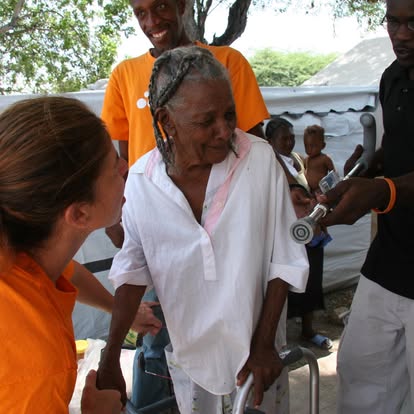
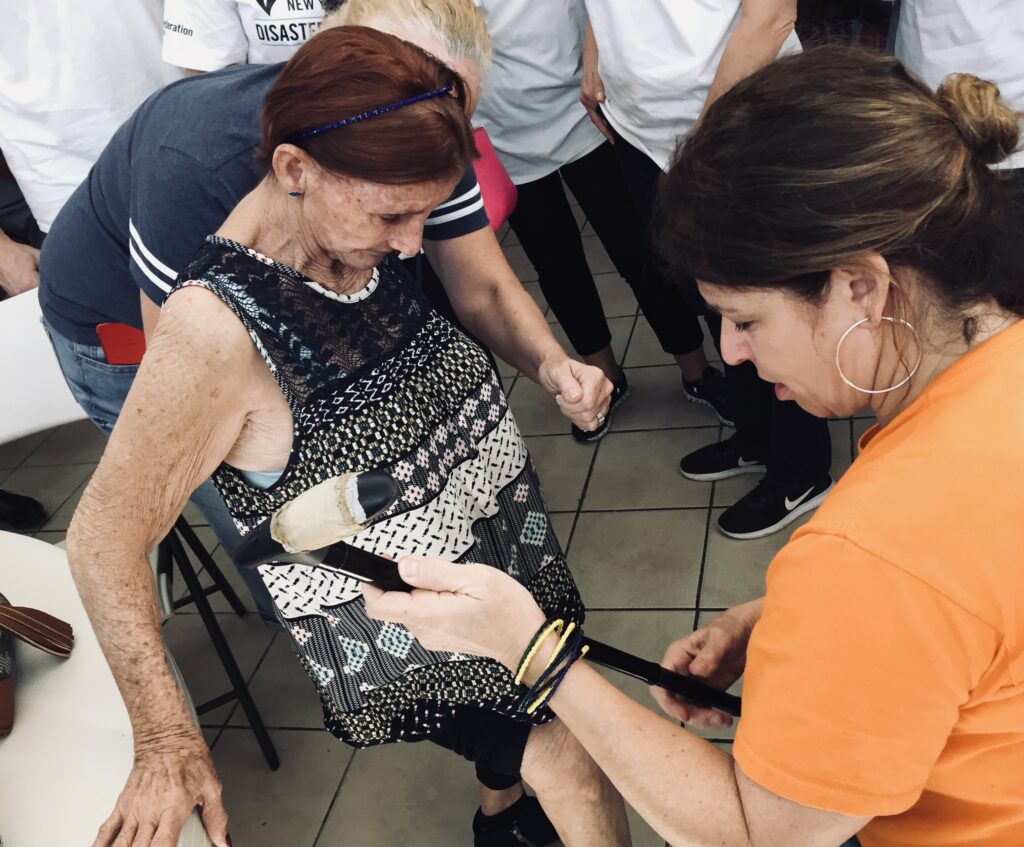
The organization rescues unused medical supplies from U.S. hospitals and redistributes them to communities facing extreme shortages. After October 7th, 2023, Afya delivered 520 units of advanced Life Saving Emergency Bags for municipalities and kibbutz’s, stretchers, suction pumps, surgical tables, rehab supplies, walking aids, and wound care supplies. Crucially, Afya does not decide what communities should receive. Instead, it listens to the people in those communities and responds accordingly.
Since February, 2022, Afya has sent 550K pounds of medical supplies in 133 shimpments, totalling more than $7.8 million worth of supplies to help people in wartorn Ukraine.
“We don’t send things people don’t need,” Danielle explains. “We ask what’s useful, and we take those answers seriously.”
Who Needs the Experience of Giving?
That same values‑driven approach shapes Afya’s volunteer model. From the beginning, Danielle asked a different question than most nonprofits: who needs the experience of giving as much as Afya needs the help?
As a result, Afya’s volunteers include neurodiverse young adults, seniors, and incarcerated individuals. In the warehouse, people who are often excluded from traditional philanthropy become essential to the mission.
Time and again, volunteers leave saying, “I saved somebody’s life today.” And in many cases, they truly did. At Afya, philanthropy becomes reciprocal as giving transforms the giver.
Raising Givers, Not Just Donors
At home, Danielle practices the same philosophy. Her children have traveled with her on missions to sub-Saharan Africa and Haiti. They have supported individuals over many years and seen firsthand what it means to show up consistently for another person.
Because of these experiences, giving has become personal and not abstract for them.
Today, that influence is visible in the paths they are choosing. One child is a filmmaker. One is a dancer. Another is becoming a social worker. Each carries forward the values first modeled by their grandfather.
This is multigenerational philanthropy as a lived experience.
As both a Fundholder and a nonprofit leader, Danielle understands the complexity donors face. There are endless needs, constant urgency, and growing pressure to give in specific ways.
That perspective has deepened her appreciation for JCF’s role. By providing trusted infrastructure and reducing friction, JCF creates space for generosity to flourish.
Seeing Philanthropy from Both Sides
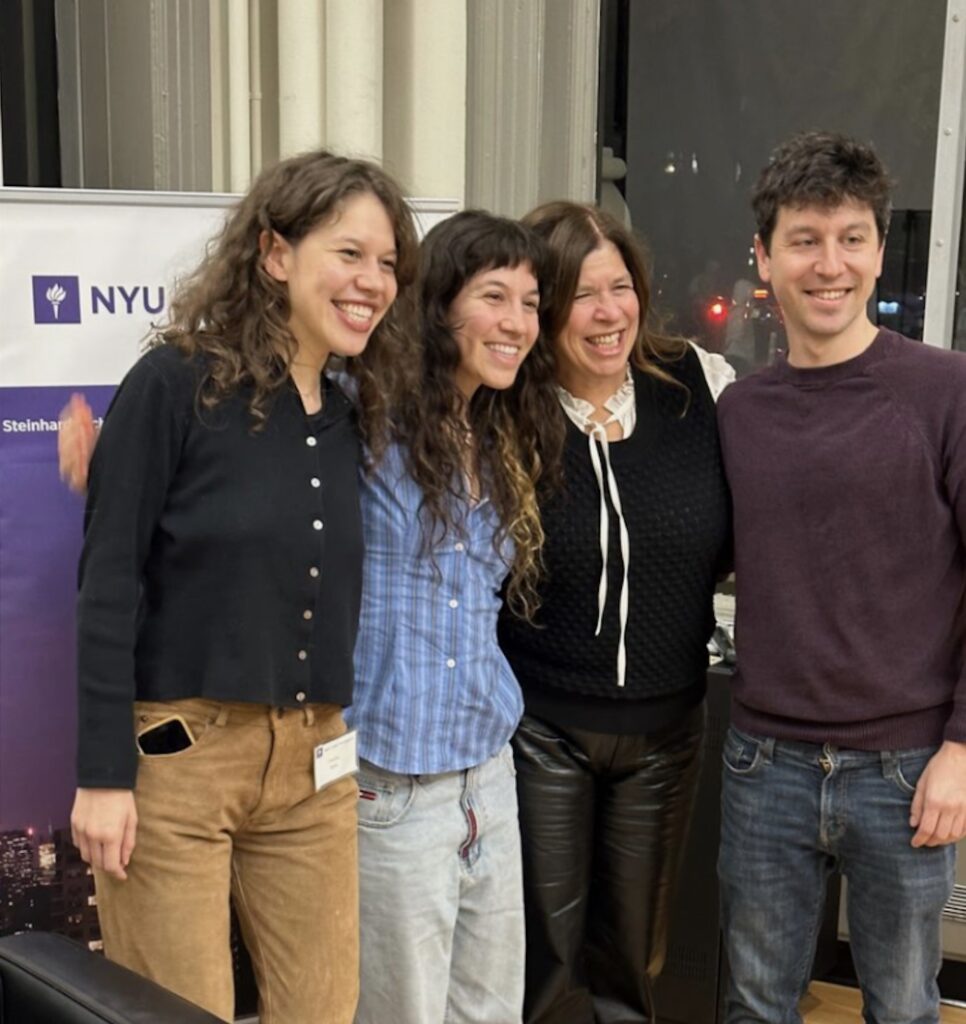
As both a Fundholder and a nonprofit leader, Danielle understands the complexity donors face. There are endless needs, constant urgency, and growing pressure to give in specific ways.
That perspective has deepened her appreciation for JCF’s role. By providing trusted infrastructure and reducing friction, JCF creates space for generosity to flourish.
Why Trust‑Based Giving Matters in a Crisis
That flexibility has been critical for Afya’s work in Ukraine, Israel, and other crisis zones. In moments when speed is essential, unrestricted support allows Afya to mobilize immediately.
JCF donors, Danielle notes, act quickly and with trust. That trust makes action possible.
“It’s about trusting the organization, not just the project,” she says. “That kind of giving changes what’s possible.”
Choosing Wild Hope
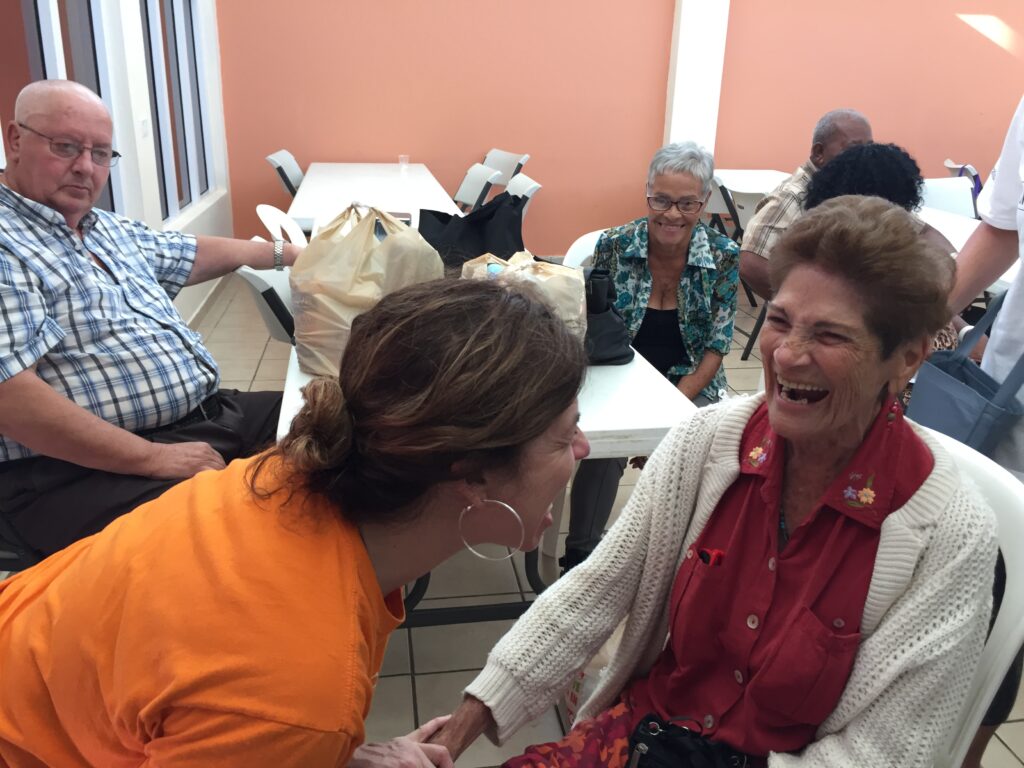
When Danielle speaks to families beginning their philanthropic journeys, her advice is simple. Start. Ask what moves you. Visit the work. Bring your children. Give imperfectly and learn along the way.
Living with what she calls “wild hope” does not require a perfect plan. Instead, it requires the courage to take the first step and the trust to believe that showing up matters.
Through her family, her work, and her partnership with JCF, Danielle Butin continues to prove that multigenerational philanthropy is not just about legacy. It is about action, connection, and choosing hope again and again.
Learn more about Afya’s Ebola crisis response here.